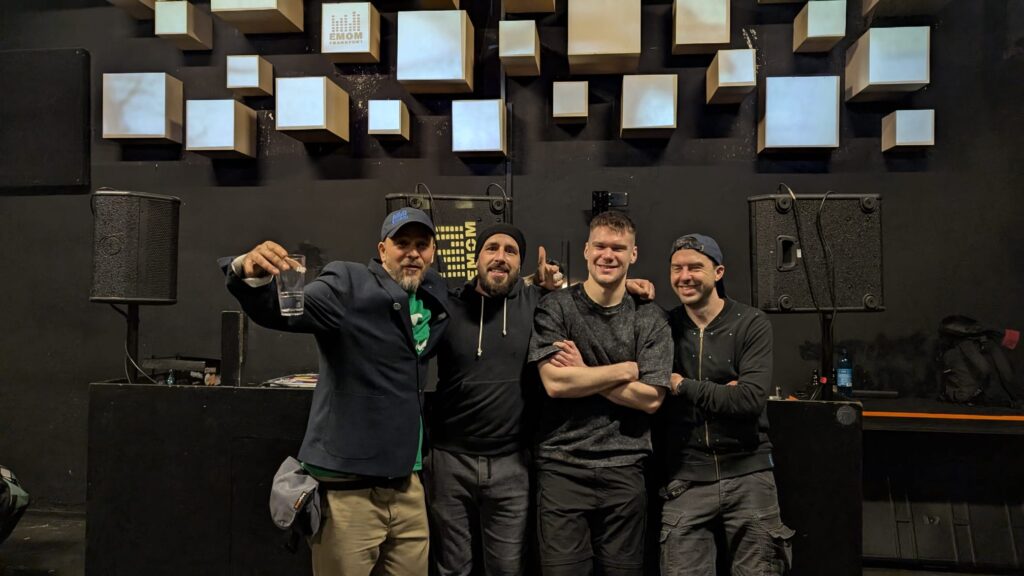
If you think your city or town could need an EMOM we’d like to encourage you to start one yourself.
Our working thesis was that there has to be a hidden figure of bedroom producers (for lack of a better word) who’d like to play live. And we’ve proven that to be the case. Meaning there’s probably a potential for successfull EMOMs almost everywhere in general.
If you’d like to talk this through with someone personally holla at us 😉 We’d be happy to help! Another article about the same topic can also be found here.
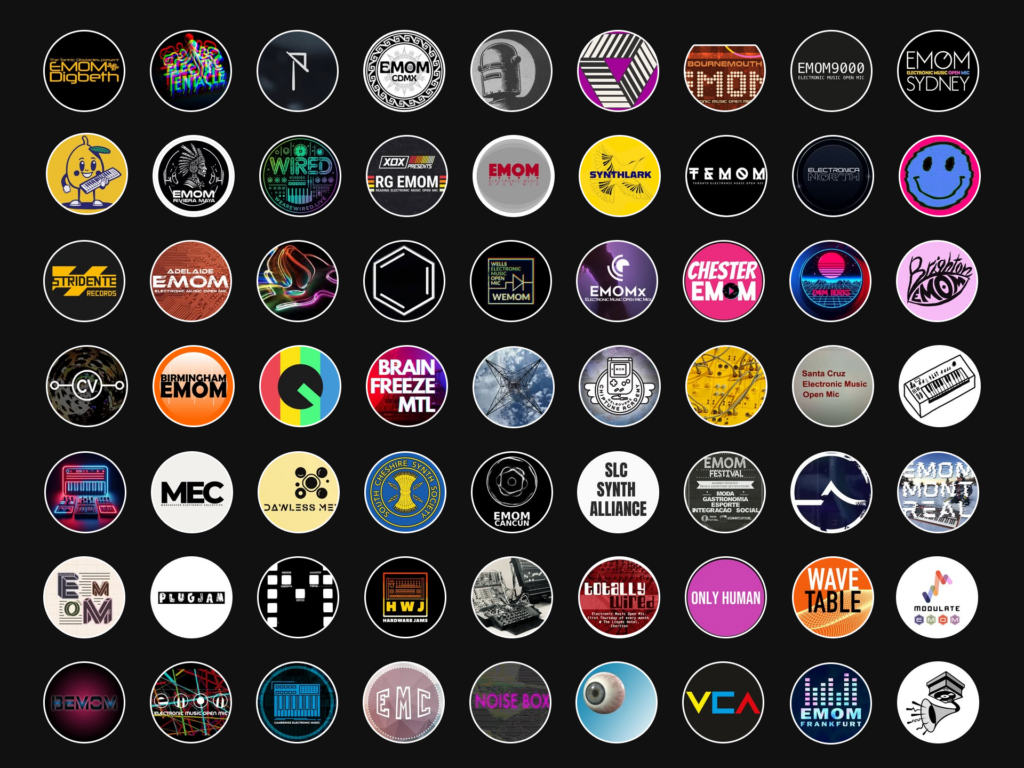
Here’s a list of things to consider and some thoughts we hope might help. This is all derived from our own personal experience developing an ongoing open stage in Frankfurt. Of course your mileage may vary, depending on a lot of factors like your personal circumstances, resources, network, location and so on..
Must-Haves
- At least one partner in crime
- Setting out to get this going totally on your own will probably prove difficult.
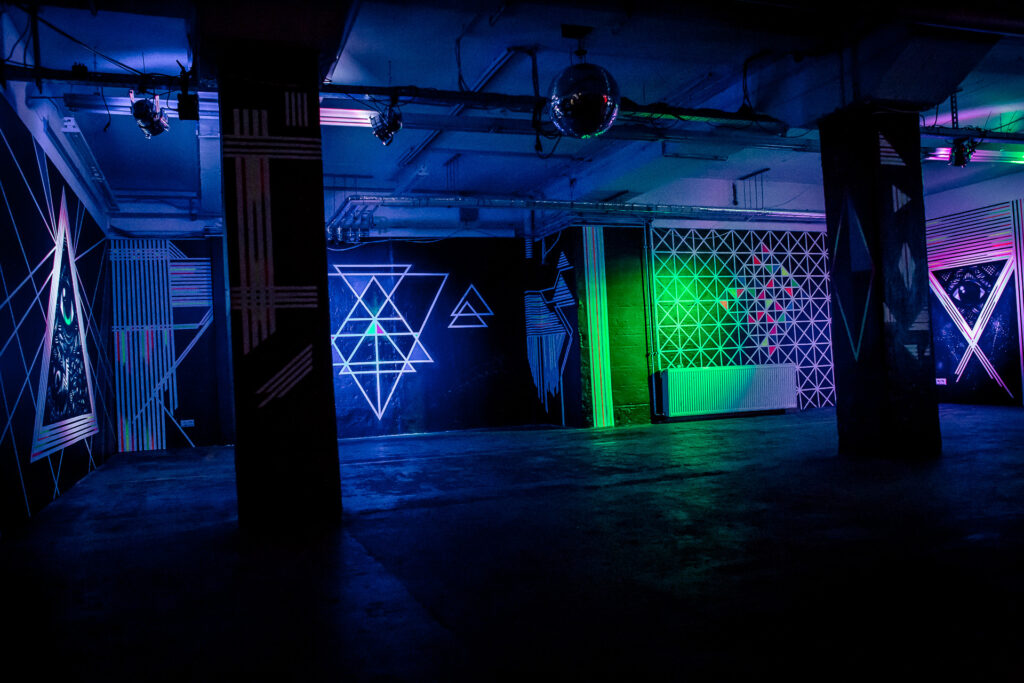
- A venue
- Can be anything really. A bar, a pub, a kiosk, a gallery, a store.. You do not need a deal for a regular (monthly) thing from the beginning. Test the waters first, consider it the flight of a test balloon and call it the pilot episode. Have a meeting afterwards with everyone involved and evaluate the experience before going on.
- PA
- If the venue doesn’t have a sufficient sound system, you will need to bring one. If you can avoid it, don’t rent one. Paying out of your own pocket, just to make it happen is impossible to maintain going forward. Instead ask that cool social worker priest from your teenage days if he’d be willing to borrow you the PA from it’s parish for one night. This includes monitoring, which brings us to the next point:
- Happy Artists
- Try to achieve the best sound possible with the tools given. Having someone on the team who is sound-tech savvy helps tremendously ofc.
- Free drinks. Clear up with the owner of the venue beforehand what’s possible to avoid misunderstandings or false expectations.
- Stress avoidance. The time-table and schedule might be pretty tight. Plan in buffer times to account for contingencies and keep cool when delays happen. Slow is smooth and smooth is fast.
- Audience
- We recommend to find a venue which has its own regular guests. This helps to make sure the acts don’t play to an empty house.
- Collab with already existing events. Your friend has an exhibition? Ask if you can put on some live acts. There’s a bake-off at the local community center? Ask if you can put on some live acts. The repair café celebrates their anniversary? Ask if you can put on some live acts. The urban gardening community does an open house event? Ask if you can put on some live acts..
- Some form of online presence and reachability
- When making a choice for a platform there can be a lot to consider. No clear recommendation here.
- For example we often got the feedback, that many people prefer to avoid instagram and the like. That’s why we created a newsletter.
- Give credit
- Everytime you publish anything anywhere name all the people who contributed and supported in any way. It’s important to publicly acknowledge that.
Open Call
- When you managed to find a place for your first event and sorted that PA question you’re good to go. Set a date and place an open call.
- You probably won’t have a large reach on social media at this point, so you will need to seek out potentially interested people personally.
- Activate your private network and musician friends. Didn’t the drummer of your cousin’s metal band have an ambient field recordings side project? Check if there’s a club for modular stuff nearby, that scene seems well connected. Are you active at an online forum/board? Start a thread there, share your idea, ask if there’s people from around the area who’d like to participate. There’s a music school? Put up a poster on their blackboard. Talk to the guys working at the local instrument and record store, and so on..
- Reach out to the EMOM community
- www.electronicmusicopenmic.com
- #emommovement
Nice-To-Haves
- A Host
- Have a mic and ask the artists how they want to be introduced to the audience. The changeover breaks can be bridged with sort of mini interviews, which helps to keep the tension and are fun. You can announce the next event, explain the concept, advertise the hat, thank the supporters and so on. Really makes a difference to have someone leading through the evening.
- Infrastructure
- Provide two tables to achieve short changeover breaks. One to perform, one to set up in the meantime. Bring enough power strips and a handfull of the most common audio adapters.
- Having a ‚backstage area‘ where the artists can store their gear safely helps to relax before and after the gig. Otherwise they’ll probably feel the need to stand guard over their (expensive) equipment all the time.
- Live Audio Recordings
- If it’s technically doable then record all the sets and send them to the performers. A free service which will surely be very much appreciated. They can share those recordings which in turn helps to raise awareness about the project.
- FIlm/Photo Documentation
- Every clip recorded at an event will help as potential promo material for the next.
- The follow-up and processing is a task in itself though. In the long run you’ll need to find someone to fill that role. Otherwise it’s gonna become very difficult to juggle your time and energy, at least in my experience.
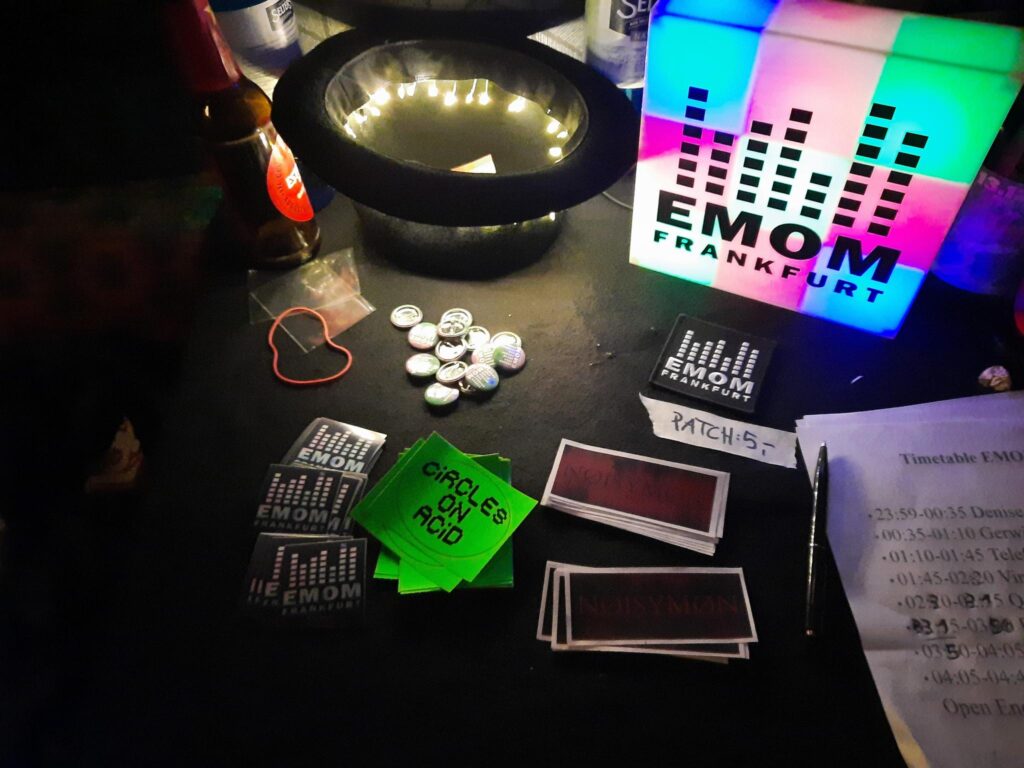
- Donations from the audience.
- Let a hat go around and give that money to the performers for their travel expenses. Won’t be much, but the gesture counts. And if it covers the cost for a taxi back home, then all the better.
- Merch/Promo
- You’ll need a budget for that, but all performers (and location owners) love a cool T-Shirt as a gift, souvenir and token of gratitude. Maybe you can even sell some to the audience.
- Printed flyers aren’t worth it in our experience. Stickers, Pin-Buttons and Patches are awesome though.
General Thoughts
Teamwork makes the dream work. Be dependable, do not make promises you can’t keep. Good communication and transparency are king and queen. Take a nothing-to-lose attitude, because it’s true. Authenticity: We started this because we wanted to get in contact with likeminded people. Check your motivation. Real recognize real. If you’re on the hunt for fame and fortune this probably is not the way to go. Being a non-commercial endeavor is hard for lack of generating funds, but has one massive advantage: Total independence. You do not owe anything to anyone except to stay genuine and honest. Doing it for the love of art and discovering artists is the best premise.
EMOM is a decentralized, community driven platform and network, harnessing it’s strength from its grassroots DIY spirit, the irl social interactions and the ensuing relationships. All welcome, all styles, all levels. BUT: #notoleranceforintolerance! Subculture is a counterproposal to mainstream. The open stage isn’t meant to be a stepping stone towards commercial success but a thing in it’s own right and that’s enough. If it opens further opportunities for the performers more power to them obviously. Stay humble. Leave your ego at the door. Karma will be on your side.
Mindset/Ethics
The artists are gifting the project, the audience and the venue their time and art. Yeah we provide a stage, but this non-commercial project runs on reciprocity only! Of course the musicians answered an open call for an open stage, which is not a booking and therefor it’s clear that no fees will be paid. But the only real justification to get out of the (totally appropriate) „playing for exposure is exploitation“ accusation is that we (the organizers) do this voluntarily and unpaid too, and the admission for the audience is free. At least that’s how I feel.
The real reward are the friends we made along the way and all the wonderful moments of personal human interaction and connection we created ourselves, together through the means of art, free from consumerism and the pressure of selling anything.
You can’t take it with you.
P.M. 01/26